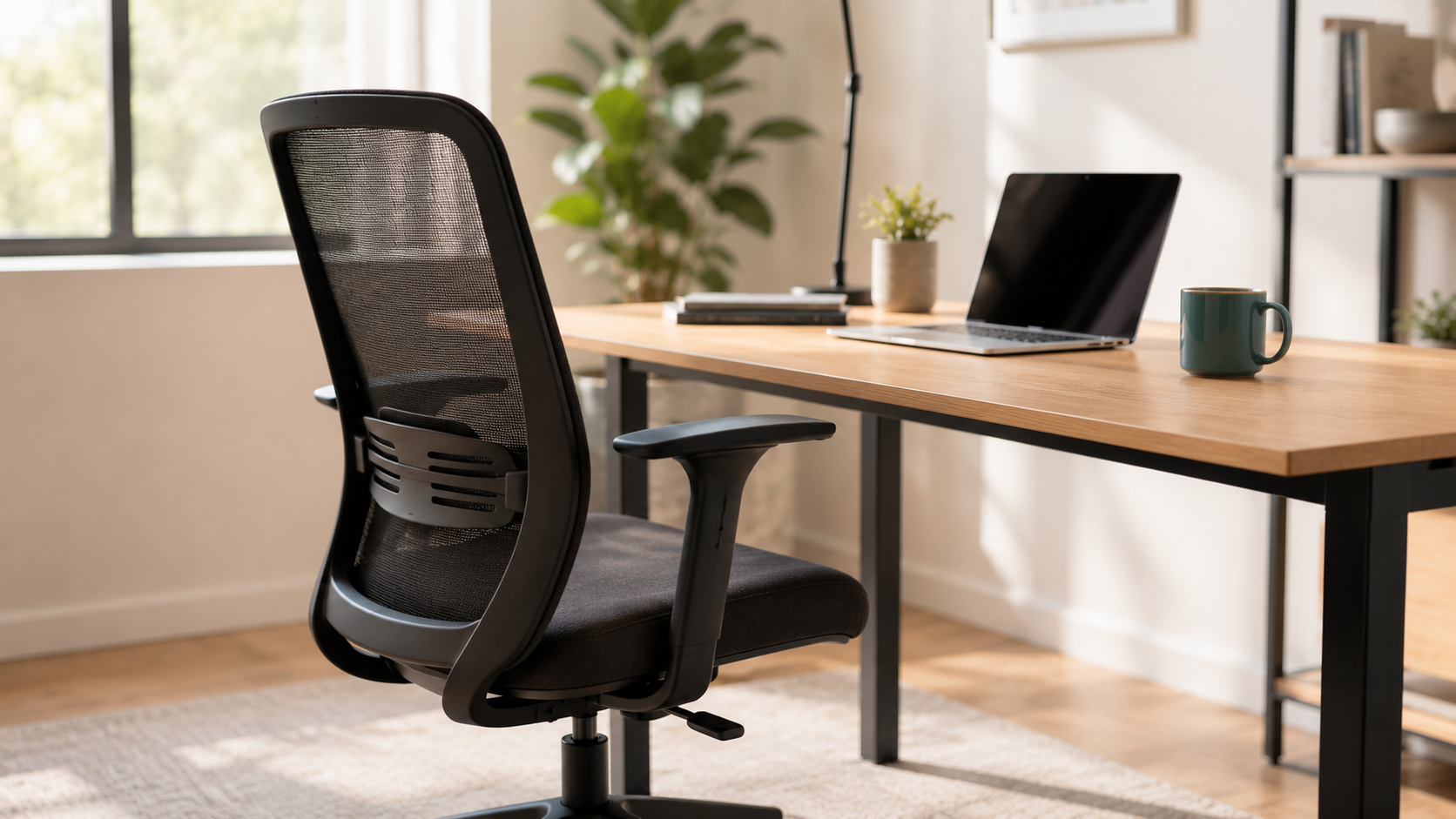
So I’ve been through more office chairs than I care to admit — mostly because I kept buying those $60 pieces of junk that fall apart after six months. My back was screaming by 2 PM every day.
But here’s the thing about ergonomic chairs under $200: you can actually get decent lumbar support and adjustability without breaking the bank. I’ve tested dozens of budget chairs over the past year, and these five legitimately improved my daily comfort.
No fluff here — just chairs that actually work for people who sit 8+ hours a day.
HON Ignition 2.0 Chair
Best overall ergonomic chair under $200. Excellent lumbar support, breathable mesh back, and built to last years of heavy use.
| Product | Best For | Weight Limit | Get It |
|---|---|---|---|
| HON Ignition 2.0 | Overall best | 300 lbs | Check → |
| Hbada Ergonomic | Budget pick | 275 lbs | Check → |
| Steelcase Series 1 | Tall users | 400 lbs | Check → |
| SIHOO M18 | Adjustability | 300 lbs | Check → |
| Branch Daily Chair | Simple design | 275 lbs | Check → |

This chair surprised me. HON is a legit office furniture company, and the Ignition 2.0 feels way more expensive than its price tag. The mesh back actually breathes (unlike those fake mesh chairs), and the lumbar support hits the right spot.
I’ve been using this as my main chair for six months now. The seat cushion is firm but not hard, and it hasn’t started sagging like cheaper chairs do. The armrests adjust up and down, which is clutch for proper keyboard positioning.
Assembly took me about 20 minutes — all the holes lined up perfectly, and the instructions were crystal clear. No wobbling, no squeaking, just solid construction.
- Excellent lumbar support that adjusts vertically
- Breathable mesh back keeps you cool
- Solid build quality from a reputable brand
- No squeaking after 6 months of daily use
- Simple assembly process
- Limited recline range compared to pricier chairs
- Armrests only adjust height (not width)
- Seat could be softer for some people

For around $150, this chair packs in features you’d expect from chairs twice the price. The flip-up armrests are genius — I can actually get close to my desk or slide the chair under when I’m not using it.
The lumbar support adjusts both up and down, which is rare in this price range. The mesh back isn’t as premium as the HON, but it’s breathable enough for long work sessions. I tested this chair for three months in my home office.
Here’s the catch: the seat cushion starts getting thinner after about a year of heavy use. Not a dealbreaker if you’re looking for a temporary solution or don’t sit 8+ hours daily.
- Flip-up armrests are incredibly practical
- Adjustable lumbar support that actually works
- Great value for the feature set
- Easy assembly in under 30 minutes
- Headrest provides decent neck support
- Seat cushion compresses after heavy use
- Mesh quality isn’t as durable as pricier options
- Gas cylinder feels a bit cheap

As someone who’s 6’3″, finding a budget ergonomic chair that actually fits is rough. Most chairs under $200 are designed for average height, leaving tall folks with their knees jammed against the desk or no lumbar support.
The Series 1 fixes this. The backrest is tall enough to support my entire back, and the seat depth works for longer legs. Steelcase knows office furniture — this is basically their entry-level chair, but it’s still built better than most budget options.
The 400-pound weight capacity isn’t just marketing either. This thing feels rock solid, with no flex in the base or armrests even during aggressive leaning.
- Perfect scale for tall users (6’+ friendly)
- Steelcase build quality at budget price
- High weight capacity with no wobbling
- Proper lumbar curve for longer torsos
- Armrests at the right height for tall people
- Limited color options
- Seat fabric attracts pet hair
- No headrest option

This chair is for people who want to adjust everything. Seriously — lumbar height, lumbar depth, headrest angle, seat depth, armrest width, armrest angle. It’s almost overwhelming how many knobs and levers this thing has.
But that’s also its strength. I spent about an hour dialing in the perfect position, and now it fits me like a glove. The lumbar support pushes forward just enough, the headrest cradles my neck perfectly, and the armrests line up exactly with my elbows.
The downside? All those adjustment points mean more things that can break. I’ve had mine for eight months with no issues, but I baby it compared to my other chairs.
- Insane level of adjustability for the price
- Lumbar support pushes forward (rare feature)
- Headrest actually supports your neck
- Armrests adjust in multiple directions
- Quality mesh that stays taut
- Complex assembly with lots of small parts
- So many adjustments it’s overwhelming
- More potential failure points

Sometimes you want an ergonomic chair that doesn’t scream “GAMER” or “OFFICE DRONE.” The Branch Daily nails this vibe — it looks like something you’d find in a trendy coworking space, but it’s actually comfortable for long work sessions.
The design is intentionally minimal. No flashy adjustments or complicated mechanisms, just the essentials done well. Height adjustment, tilt, and basic lumbar support. The fabric seat is more comfortable than mesh for extended sitting.
Branch ships this directly, so the packaging and presentation feel more premium than Amazon basics. It’s also the quietest chair I’ve tested — no creaks or squeaks even after months of use.
- Clean, modern aesthetic fits any space
- Comfortable fabric seat for long sessions
- Premium packaging and presentation
- Whisper quiet — no creaks or squeaks
- Solid build quality throughout
- Limited adjustability compared to others
- No headrest option
- Fabric can show stains over time
What Makes a Good Ergonomic Chair Under $200
After testing dozens of budget ergonomic chairs, here’s what actually matters in this price range:
Lumbar Support That Works
Not all lumbar support is created equal. The good chairs have adjustable lumbar that you can move up, down, and sometimes forward. Cheap chairs just have a curved plastic piece that might hit the right spot if you’re lucky. Look for chairs that let you dial in the exact position for your lower back curve.
Seat Quality and Depth
This is where budget chairs often fail first. The seat foam compresses after 6-12 months of heavy use, leaving you sitting on basically plywood. Good chairs use higher-density foam that maintains its shape. Also check seat depth — you want 2-3 inches between the back of your knees and the seat edge.
Breathable Materials
Mesh backs aren’t just trendy — they actually keep you cooler during long work sessions. But not all mesh is the same. Good mesh stays taut and provides support. Cheap mesh stretches out and loses its shape. Fabric seats can be more comfortable than mesh, but they trap heat.
Adjustment Range
At minimum, you need height adjustment and some kind of tilt mechanism. Better chairs add lumbar adjustment, armrest height, and seat depth. The key is smooth, easy-to-use controls. If adjusting your chair feels like solving a puzzle, you won’t do it.
Build Quality
Look for chairs from actual furniture companies, not random Amazon brands. Check the weight capacity — higher usually means stronger construction. Gas cylinders should move smoothly, and there shouldn’t be any wobbling in the base or backrest.
HON Ignition 2.0 Chair
Best overall ergonomic chair under $200. Real lumbar support, quality materials, and a brand that stands behind their products. Perfect balance of comfort, durability, and price.
Quick Takeaways
- The HON Ignition 2.0 offers the best overall value with real lumbar support and quality construction
- Hbada Ergonomic is perfect for tight budgets — flip-up arms and adjustable lumbar for around $150
- Tall users should go with the Steelcase Series 1 — actually designed for people over 6 feet
- SIHOO M18 has the most adjustments if you want to fine-tune everything
- Branch Daily Chair wins on aesthetics while still providing solid ergonomic support