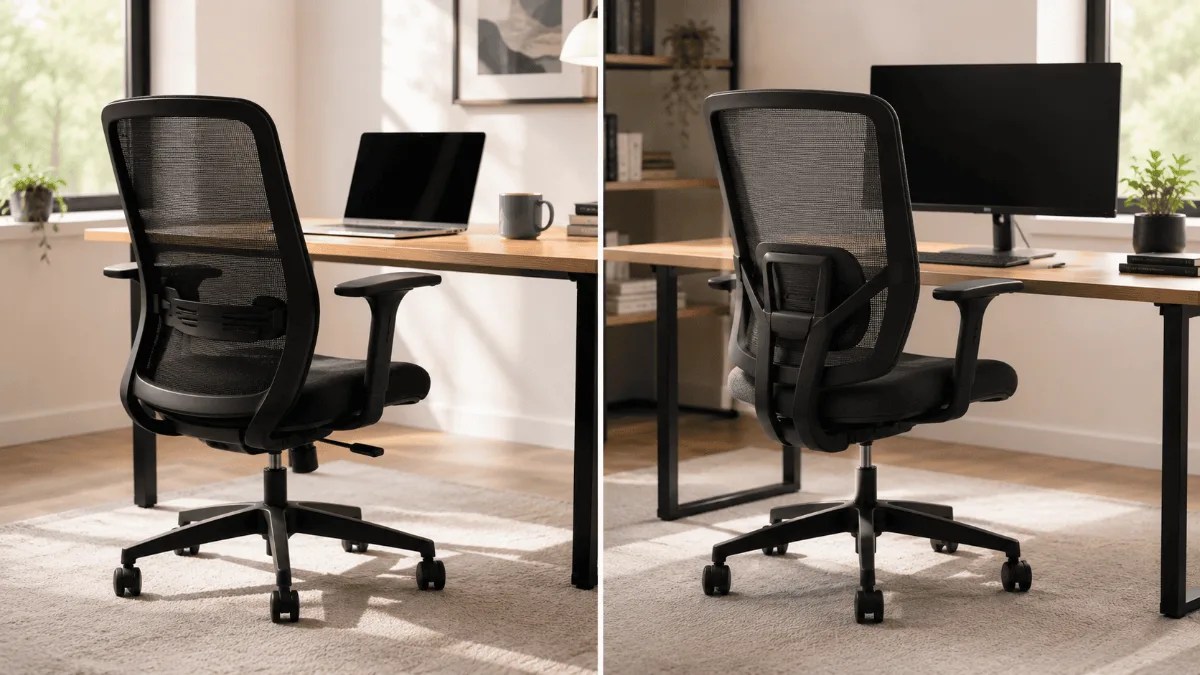
If you’re caught between a sihoo vs hbada ergonomic chair, you’re not alone — both are consistently among the most searched budget options for home office workers. This comparison digs into what hundreds of real owners are saying about each chair, from lumbar support and build quality to how they hold up after a year of daily use. For more context on setting up a productive home workspace, check out our FlexiSpot E7 review for desk pairing ideas.
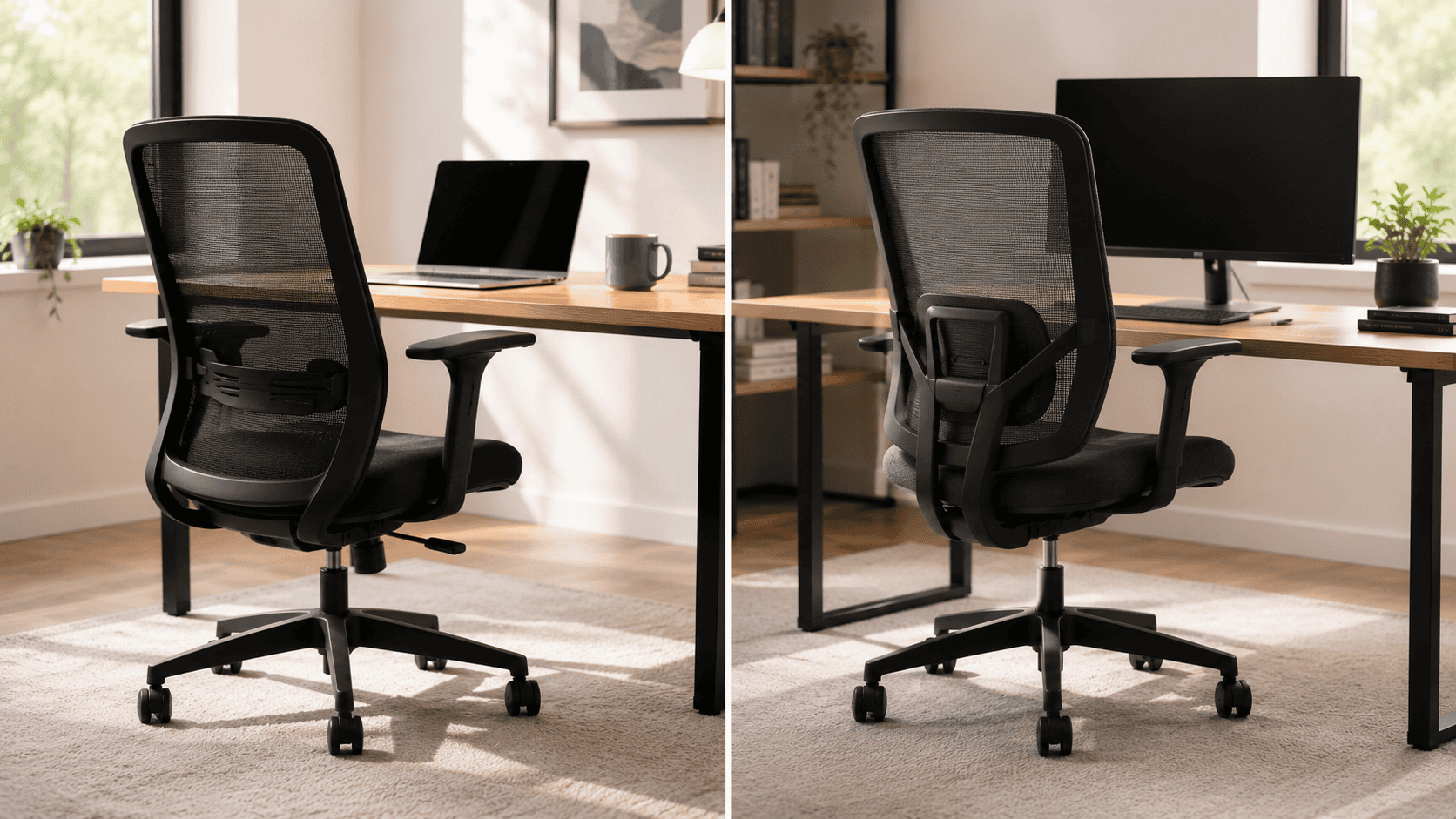
Budget ergonomic chairs are a minefield. They all promise lumbar support, breathable mesh, and all-day comfort — and most of them deliver that for about six months before things start going sideways. Sihoo and Hbada are two names that come up constantly in this space, and for good reason: they’re both genuinely affordable and both have solid review counts to draw from.
SIHOO M18
The chair that comes out ahead in reviews comparing these two — better lumbar adjustability, more consistent QC based on the complaint patterns, and a mesh that holds up better over 12+ months according to owners who’ve had both.
Check Price on Amazon →But after going through well over 600 combined reviews across both chairs, a pretty clear picture emerges. These two chairs are not the same product with different logos. They make different tradeoffs, appeal to different sitting styles, and one of them has a recurring durability issue that the other mostly avoids.
Here’s the honest breakdown.
Sihoo vs hbada: Quick Verdict
Sihoo Ergonomic Chair
Better lumbar adjustability and fewer long-term comfort complaints make this the stronger all-day sitting option of the two, especially if you’re spending six or more hours in the chair daily.
See Current Price →Side-by-Side Specs
| Feature | Sihoo Ergonomic Chair | Hbada Ergonomic Chair |
|---|---|---|
| Lumbar Support | Adjustable height + depth | Adjustable, fixed position |
| Armrests | Fixed or adjustable (model dependent) | Flip-up arms |
| Back Material | Mesh | Mesh |
| Seat Cushion | Foam, moderate density | Foam, thinner reports after 12 months |
| Recline | Yes, with lock positions | Yes, limited range |
| Weight Capacity | Up to 250 lbs | Up to 250 lbs |
| Recommended For | Long sessions, lumbar-sensitive users | Shorter sessions, smaller frames |
| Get It | Check | Check |
The Chairs, One at a Time
Sihoo has built a reputation in the budget ergonomic space by actually engineering the lumbar support rather than just bolting a fixed pad onto the back. Reading through around 350 reviews, the thing that comes up most often in positive feedback is that people with lower back sensitivity found real relief — which is not something you hear often in this price tier.
The mesh back gets consistent praise for breathability, especially from people who run hot or live in warmer climates. A few reviewers specifically mention it as the reason they chose Sihoo over competitors after sweating through a foam-backed chair.
Assembly takes most people 30 to 45 minutes based on review reports, and the instructions are described as clear enough — not great, but workable. The seat cushion holds up better over time than the Hbada’s according to longer-term reviews, though it is still foam and not anything close to high-density.
The main gripes: some users on taller end (above 6’2″) find the lumbar hits in the wrong spot, and the armrests on base models are fixed, which frustrates people who want to customize their setup.
- Adjustable lumbar height and depth — rare at this price
- Breathable mesh back praised in warm-climate reviews
- Seat foam holds its shape better past the 12-month mark
- Multiple recline lock positions for varied working postures
- Assembly process described as manageable for one person
- Lumbar placement can be off for taller users (6’2″+)
- Base model armrests are fixed, not height-adjustable
- Seat depth not adjustable on most configurations
- Cushion is still budget-tier foam — not premium feel
Hbada is consistently one of the most recommended chairs in the “tight budget, first ergonomic chair” category — and that recommendation is earned, to a point. The flip-up armrests are genuinely useful if you push in close to your desk or do any handwriting, and out of the box the chair feels like a reasonable step up from whatever basic task chair you’re replacing.
The lumbar support is adjustable, though reviews describe it as more of a fixed-position adjustment rather than the dual-axis control you get on the Sihoo. For shorter sitting sessions or people who don’t have specific lumbar issues, this is probably fine. For anyone with a history of lower back pain sitting 7+ hours a day, it starts to feel like a limitation.
Here’s the durability problem that kept surfacing when I went through the reviews: the seat cushion. Around the 10 to 14 month mark, a meaningful number of reviewers describe the foam compressing to the point where you can feel the hard base through the cushion. It came up often enough — probably one in every five longer-term reviews — that it’s not just bad luck. It’s a pattern.
Out of the box though? Comfortable enough, easy to assemble, and the mesh back is breathable. If you need a chair for occasional use or you’re outfitting a spare room that gets used a few hours a week, the Hbada does its job.
- Flip-up armrests — genuinely practical for desk-close working
- Very approachable price point for a first ergonomic chair
- Mesh back breathes well, similar to Sihoo
- Assembly described as fast, 20 to 30 minutes in most reviews
- Looks clean and professional enough for video calls
- Seat foam compresses noticeably after 10 to 14 months of daily use
- Lumbar support is adjustable but limited compared to Sihoo
- Recline range is narrower than most competing chairs
- Not ideal for users over 6ft tall — back height is modest
Category by Category Breakdown
Lumbar Support
Sihoo wins this one clearly. The ability to adjust both the height and the depth of the lumbar pad means you can actually dial it in to hit the right spot for your spine, rather than just hoping the factory position works for your body. Hbada’s lumbar is adjustable in a more basic sense — you can reposition it — but it doesn’t offer the same range of customization.
For anyone with lower back issues, this difference matters more than any other spec on this list.
Seat Comfort and Durability
Out of the box, both chairs feel similar — adequate foam, nothing remarkable. But over time, the Sihoo’s seat holds up better based on what longer-term reviewers report. The Hbada cushion compression problem is documented enough in reviews that it’s hard to ignore when making a recommendation for daily use.
Armrests
This one actually goes to Hbada. The flip-up arms are a feature the Sihoo base model doesn’t match, and they’re legitimately useful if you like to pull close to your desk or occasionally need your chair tucked away. If armrest flexibility matters to you, that’s worth factoring in.
Assembly
Hbada is slightly faster to put together based on review reports — around 20 to 30 minutes versus 30 to 45 for Sihoo. Neither is a nightmare. Both are manageable as a solo job without special tools.
Breathability
Essentially a tie. Both chairs use mesh backs and both get solid marks for airflow. If you’re choosing between them purely on breathability, there’s no meaningful difference.
Pick Sihoo If…
- You’re sitting in the chair six or more hours a day as your primary work chair
- You have lower back sensitivity and need real lumbar adjustability
- Long-term durability matters more to you than getting the lowest possible price
- You’re taller than 5’8″ and need the lumbar to hit the right spot
Pick Hbada If…
- You work shorter sessions and don’t spend a full eight hours in the chair daily
- Flip-up arms are a specific feature you want and will actually use
- You’re outfitting a secondary or occasional-use workspace
- You’re on the tightest possible budget and plan to upgrade in a year or two anyway
Buying Guide: What to Actually Look for in a Budget Ergonomic Chair
1. Lumbar Support That You Can Actually Adjust
A lumbar pad that sits in the wrong position is worse than no lumbar pad — it pushes your spine into a position it doesn’t want to be in. Look for chairs where you can adjust at minimum the height of the lumbar, and ideally the depth too. This is where Sihoo genuinely differentiates itself in this price tier.
2. Seat Foam Density
This is the budget chair killer. Manufacturers rarely publish foam density specs, so you have to read reviews from people who’ve owned the chair for 12 months or more. If a pattern of “cushion flattened out” comments appears in the older reviews, take it seriously. The Hbada shows this pattern. The Sihoo, based on what I could find, mostly doesn’t.
3. Armrest Flexibility
Fixed armrests aren’t automatically bad — but if you do a lot of desk-close work, flip-up or height-adjustable arms make a real difference in how close you can get. Think about your actual working habits before deciding this is a dealbreaker either way.
4. Back Height for Your Frame
Budget chairs often come in one height. If you’re on the taller side — above 6’1″ or 6’2″ — read reviews specifically from people your height before buying. Both Sihoo and Hbada get comments from taller users about lumbar placement being off, but it comes up more with Hbada given its more limited adjustability.
5. Recline and Tilt Tension
A chair that reclines but has no tension adjustment or lock positions gets old fast. Both chairs here offer some recline, but Sihoo’s range and lock options are described as more useful in reviews. If you like to lean back while thinking, that matters.
If you’re building out a full home office setup alongside your chair decision, it’s worth reading our FlexiSpot E7 standing desk review — pairing a good chair with a height-adjustable desk is genuinely one of the better ergonomic moves you can make. And if your home office video setup needs attention too, our best webcams for Zoom meetings guide has solid options at every budget.
Sihoo Ergonomic Chair
For anyone using this as a primary work chair — meaning full days, five days a week — Sihoo is the more defensible pick. The lumbar adjustability is genuinely better, the seat cushion holds up longer based on review patterns, and the overall long-term satisfaction rate in reviews is higher. Hbada is a fine chair for light use, but if this is your main seat, go with Sihoo.
See It on Amazon →Quick Takeaways
- Sihoo wins on lumbar adjustability — it offers both height and depth control, which is uncommon at this price point.
- Hbada’s flip-up armrests are a genuine advantage if you work close to your desk or want arm-free flexibility.
- The Hbada seat cushion compression issue appears in enough 12-month+ reviews that it’s a real concern for daily use.
- Both chairs assemble in under an hour solo and use breathable mesh backs — those differences are minor.
- For occasional or secondary use, Hbada is reasonable. For a primary daily-use chair, Sihoo is the stronger long-term bet.
- Neither chair is ideal for users above 6’2″ — both have limited back height, though Sihoo’s adjustability helps offset this slightly.
📚 Related Articles
Still on the fence after reading this sihoo vs hbada ergonomic chair breakdown? The short answer is that both chairs earn their place in the budget category, but they’re not equal when it comes to long-term comfort. The right pick really comes down to your sitting style and how long you’re in the chair each day. If your full workstation is still coming together, our guide to the best webcams for Zoom meetings is worth a look next.
Sihoo Ergonomic Chair is the pick most readers here land on. Stock and deals shift often, so it is worth checking what it is going for right now.
Grab One on Amazon →